Search results: 1806
1. Describe the fundamentals of circuit switching and distinguish complex telephone systems.
2. Differentiate the fundamentals of Space division switching and time division switching.
3. Design, develop and evaluate the telecom traffic to meet defined specifications and needs.
4. Identify the control of switching networks and signalling concepts.
5. Classify the engineering concepts of packet switching and routing which will help to design various switch architectures for future research work.
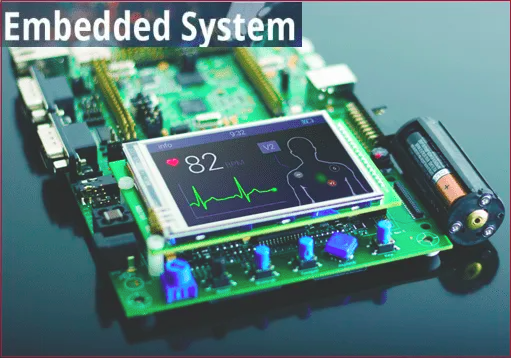
An embedded system is a microprocessor-based computer hardware system with software that is designed to perform a dedicated function, either as an independent system or as a part of a large system. At the core is an integrated circuit designed to carry out computation for real-time operations.
Complexities range from a single microcontroller to a suite of processors with connected peripherals and networks; from no user interface to complex graphical user interfaces. The complexity of an embedded system varies significantly depending on the task for which it is designed.
Embedded system applications range from digital watches and microwaves to hybrid vehicles and avionics. As much as 98 percent of all microprocessors manufactured are used in embedded systems.
This course is specially designed for the first year Engineering students. It comprises of basic understanding of Electronics Engineering and their application in modern day technology.
UNIT-1: Energy Scenario: Classification of Energy, Indian energy scenario, Sectorial energy
consumption (domestic, industrial and other sectors), energy needs of growing economy, energy
intensity, long term energy scenario, energy pricing, energy security, energy conservation and its
importance, energy strategy for the future.
Energy Conservation Act 2001 and related policies: Energy conservation Act 2001 and its
features, notifications under the Act, Schemes of Bureau of Energy Efficiency (BEE) including
Designated consumers, State Designated Agencies, Electricity Act 2003, Integrated energy policy,
National action plan on climate change, ECBC code for Building Construction.
UNIT-2: Demand Side Management (DSM): Concept and Scope of Demand Side Management,
Difference between Energy Efficiency and DSM, Evolution of Demand Side Management, DSM
Strategy, Planning, Implementation and its application, Customer Acceptance & its implementation
issues, National and International Experiences with DSM, UDAY scheme and other government
initiatives for DISCOMs.
Energy Monitoring and Targeting: Defining monitoring & targeting, elements of monitoring &
targeting, data and information-analysis, techniques –energy consumption, production, cumulative
sum of differences (CUSUM). Energy Management Information Systems (EMIS)
UNIT-3: Energy Audit: Aim of energy Audit, Strategies of Energy Audit, Energy management
Team Consideration in implementing energy conservation Programme, Process flow diagram, Energy
Audit report format, Benchmarking and Energy Performance, Instruments for energy audit, Economic
analysis.
UNIT-4: System Audit of Mechanical Utilities: Pumps, types and application, unit’s assessment,
improvement option, parallel and series operating pump performance. Energy Saving in Pumps &
Pumping Systems. Bloomers (Blowers) types & application, its performance assessment, series &
parallel operation applications & advantages. Energy Saving in Blowers Compressors, types &
applications, specific power consumption, compressed air system & economic of system changes.
Energy Saving in Compressors & Compressed Air Systems Cooling towers, its types and
performance assessment & limitations, water loss in cooling tower. Case studies related to Energy
Audit & Management in Industries
UNIT-5: Energy Efficient Technology: Need for Energy Efficient Devices, Life Cycle Assessment,
Comparison between simple pay-back and life cycle cost assessment, Energy Efficient Motors-motor
losses and loss reduction techniques, determining and comparing motor efficiencies, motor efficiency
testing standards, BIS specification for Energy Efficient Motors, efficiency as a function of load,
Energy Efficient Lighting Sources-compact fluorescent lamp, light emitting diode, LED lamp, role of
voltage on the efficiency of lighting system, Importance of Automatic power factor controllers,
Variable Frequency Drives.