Search results: 232
|
CO1 |
analyse and describe the project. |
BL-4 |
|
CO2 |
formulate clear work plan and procedures. |
BL-4 |
|
CO3 |
design the software various designing techniques. |
BL-5 |
|
CO4 |
implement a project by using a programming language. |
BL-5 |
|
CO5 |
design report and able to present and able to present their work |
BL-5 |
CO 1 Explain main components, services, types and structure of Operating Systems. K2
CO 2 Apply the various algorithms and techniques to handle the various concurrency
control issues. K3
CO 3 Compare and apply various CPU scheduling algorithms for process execution. K2
CO 4 Identify occurrence of deadlock and describe ways to handle it. K3
CO 5 Explain and apply various memory, I/O and disk management techniques. K5
- Teacher: MR ANKIT VERMA [MCA]
Course Objectives
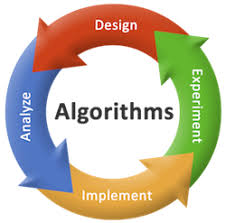
The objective of the course is to teach techniques for effective problem solving in computing.
The use of different paradigms of problem solving will be used to illustrate clever and efficient
ways to solve a given problem. In each case emphasis will be placed on rigorously proving
correctness of the algorithm. In addition, the analysis of the algorithm will be used to show the
efficiency of the algorithm over the naive techniques.
- Teacher: DR PRASHANT AGARWAL [MCA]
Course Objective
- To learn the systematic approach to the development, operation, maintenance and retirement of software.
- To develop methods and procedures for software development that can scale up for large systems and that can be used consistently to produce high-quality software at low cost and with a small cycle of time.
- Understanding of software testing approaches such as unit testing and integration testing.
- Describe software measurement and software risks.
- Understanding of software evolution and related issues such as version management.
- Understanding on quality control and how to ensure good quality software.

SE Lab Outcome
- Learn about different software development process models and software engineering principles and develop an ability to apply them to software design of real life problems.
- Plan, analyse, design and implement a software project using programming languages like Java, Python, R etc.
- To design report and able to present work with their team.

COURSE OUTCOME
CO 1:- Study and aware fundamentals of mobile computing.
CO 2:- Study and analyze wireless networking protocols, applications andenvironment.
CO 3:- Understand various data management issues in mobile computing.
CO 4:- Analyze different type of security issues in mobile computing environment.
CO 5:- Study, analyze, and evaluate various routing protocols used in mobile computing.
- Teacher: DR DEEPA [MBA]
- Teacher: Komal Salgotra [MCA]
Course Objective
- To learn the systematic approach to the development, operation, maintenance and retirement of software.
- To develop methods and procedures for software development that can scale up for large systems and that can be used consistently to produce high-quality software at low cost and with a small cycle of time.
- Understanding of software testing approaches such as unit testing and integration testing.
- Describe software measurement and software risks.
- Understanding of software evolution and related issues such as version management.
- Understanding on quality control and how to ensure good quality software.

- Teacher: DR AMIT KUMAR GUPTA [MCA]
- Teacher: DR AMIT KUMAR [MCA]
- Teacher: DR AMIT KUMAR GUPTA [MCA]
- Teacher: MR NARESH CHANDRA [MCA]
COURSE OUTCOME
CO 1:- Study and aware fundamentals of mobile computing.
CO 2:- Study and analyze wireless networking protocols, applications andenvironment.
CO 3:- Understand various data management issues in mobile computing.
CO 4:- Analyze different type of security issues in mobile computing environment.
CO 5:- Study, analyze, and evaluate various routing protocols used in mobile computing.
- Teacher: MR ANKIT VERMA [MCA]



- Teacher: DR AMIT KUMAR GUPTA [MCA]