Search results: 274
|
Course Code: CA211E |
Course Name: UI/UX Design for Web Application |
L |
T |
P |
C |
|||||||||||||||||||||||||||||||||||||||||||||||||||||||
|
|
3 |
0 |
0 |
3 |
||||||||||||||||||||||||||||||||||||||||||||||||||||||||
|
Pre-requisite: Understanding of mobile and web application. |
||||||||||||||||||||||||||||||||||||||||||||||||||||||||||||
|
Course Objectives: |
||||||||||||||||||||||||||||||||||||||||||||||||||||||||||||
|
Learn to create responsive and accessible designs for both mobile and web applications while gaining hands-on experience with standard tools. Develop essential skills by working on real-world projects, helping students to build a strong UI/UX portfolio and preparing them for a successful career in design. |
||||||||||||||||||||||||||||||||||||||||||||||||||||||||||||
|
Course Outcome: |
||||||||||||||||||||||||||||||||||||||||||||||||||||||||||||
|
||||||||||||||||||||||||||||||||||||||||||||||||||||||||||||
|
CO-PO Mapping (Scale 1: Low, 2: Medium, 3: High):
|
||||||||||||||||||||||||||||||||||||||||||||||||||||||||||||
|
Detailed Syllabus |
||||||||||||||||||||||||||||||||||||||||||||||||||||||||||||
|
Unit 1 |
Introduction to UI/UX Design |
08 hours |
||||||||||||||||||||||||||||||||||||||||||||||||||||||||||
|
Basics: Understanding UI (User Interface) and UX (User Experience), Differences between UI and UX, Importance of UI/UX in Web and Mobile Applications, UI/UX Design Process and Workflow, Design Thinking and Human-Centered Design (HCD), Design Thinking & User-Centered Design, Tools for UI/UX Design like Figma, Canva, Adobe XD, Sketch, Balsamiq. |
||||||||||||||||||||||||||||||||||||||||||||||||||||||||||||
|
Unit 2 |
User Research & Analysis |
08 hours |
||||||||||||||||||||||||||||||||||||||||||||||||||||||||||
|
UX Research Methods: Understanding User Needs and Behavior, Conducting User Interviews and Surveys, Competitor Analysis and Market Research, Defining User Journeys and User Flows, User Persona & User Journey, Information Architecture (IA), Wire-framing and Prototyping. |
||||||||||||||||||||||||||||||||||||||||||||||||||||||||||||
|
Unit 3 |
UI Design Principles |
08 hours |
||||||||||||||||||||||||||||||||||||||||||||||||||||||||||
|
Design Principles: Visual Design Principles (Color Theory, Typography, Layouts), Creating a Design System and Style Guide, Icons, Buttons, and Micro-interactions, UI Patterns and Design for mobile and web, Designing for Different Screen Sizes (Responsive and Adaptive Design) |
||||||||||||||||||||||||||||||||||||||||||||||||||||||||||||
|
Unit 4 |
Web & Mobile UI/UX Design |
08 hours |
||||||||||||||||||||||||||||||||||||||||||||||||||||||||||
|
Web Design:HTML & CSS for UI Design, CSS Frameworks (Bootstrap, Tailwind CSS), Responsive Web Design (RWD) using Flexbox & Grid. Mobile Design: Mobile-First Design Approach, Touchscreen Design Considerations, Guidelines for iOS (Apple Human Interface Guidelines), Guidelines for Android (Material Design), Web Design vs. Mobile Design, |
||||||||||||||||||||||||||||||||||||||||||||||||||||||||||||
|
Unit 5 |
UX Testing & Evaluation |
08 hours |
||||||||||||||||||||||||||||||||||||||||||||||||||||||||||
|
Testing & Evaluation: A/B Testing and Usability Testing, Heatmaps and Analytics for User Behavior Tracking, Eye-Tracking and Click stream Analysis, Measuring UX Success with Metrics (Time on Task, Conversion Rates, etc.), UX Heuristics and Cognitive Load Analysis, Analyzing UI/UX of Popular Mobile and Web Applications. Redesigning an Existing Application (Mini Project). |
||||||||||||||||||||||||||||||||||||||||||||||||||||||||||||
|
Total Lecture Hours |
40 hours |
|||||||||||||||||||||||||||||||||||||||||||||||||||||||||||
|
Textbook: 1. Creative Tim, Roots of UI/UX: Learn to Develop Intuitive Web Experiences, Self-published, 2023. 1. Newbies Guide to UI/UX Design Using Figma, Author: Anthony E. Sanchez, Publisher: Inigi Publishers LLC, Year: 2024. |
||||||||||||||||||||||||||||||||||||||||||||||||||||||||||||
|
|
||||||||||||||||||||||||||||||||||||||||||||||||||||||||||||
|
Reference Books: 1. The Art and Science of UX Design, Author: Anthony Conta, Year: 2023, Publisher: Pearson 2. Debasish Sarkar, Web and Mobile Interface Design, Oxford University Press, 2015. 3. Making Sense of UX Research, Authors: Raffaele Boiano & Riccardo Mazzucchelli, Year: 2022, Publisher: Apress 1. Pawan Lingras and Rucha Lingras, Web Usability: A User-Centered Design Approach, Pearson India, 2017. |
||||||||||||||||||||||||||||||||||||||||||||||||||||||||||||
|
Mode of Evaluation:
|
||||||||||||||||||||||||||||||||||||||||||||||||||||||||||||
- Teacher: MR ANKIT VERMA [MCA]
- Teacher: Bhagvan Gupta [CS]
- Teacher: Ms. Kirti Sharma [CS]
- Teacher: Nishant Raj [CS]
- Teacher: Rajendra Patel [CS]
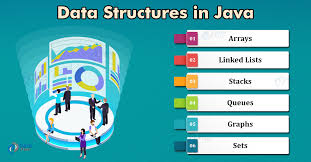
This course provides a comprehensive foundation in data structures and algorithms with systematic implementation using Java. It covers fundamental concepts such as arrays, strings, recursion, searching and sorting techniques, linear and non-linear data structures, and the Java Collections Framework. The course emphasizes algorithmic thinking, problem solving, and performance analysis through time and space complexity. With a balanced focus on theory and hands-on programming, it prepares students for advanced computing subjects, competitive programming, and industry-oriented software development.
- Teacher: DR PRASHANT AGARWAL [MCA]
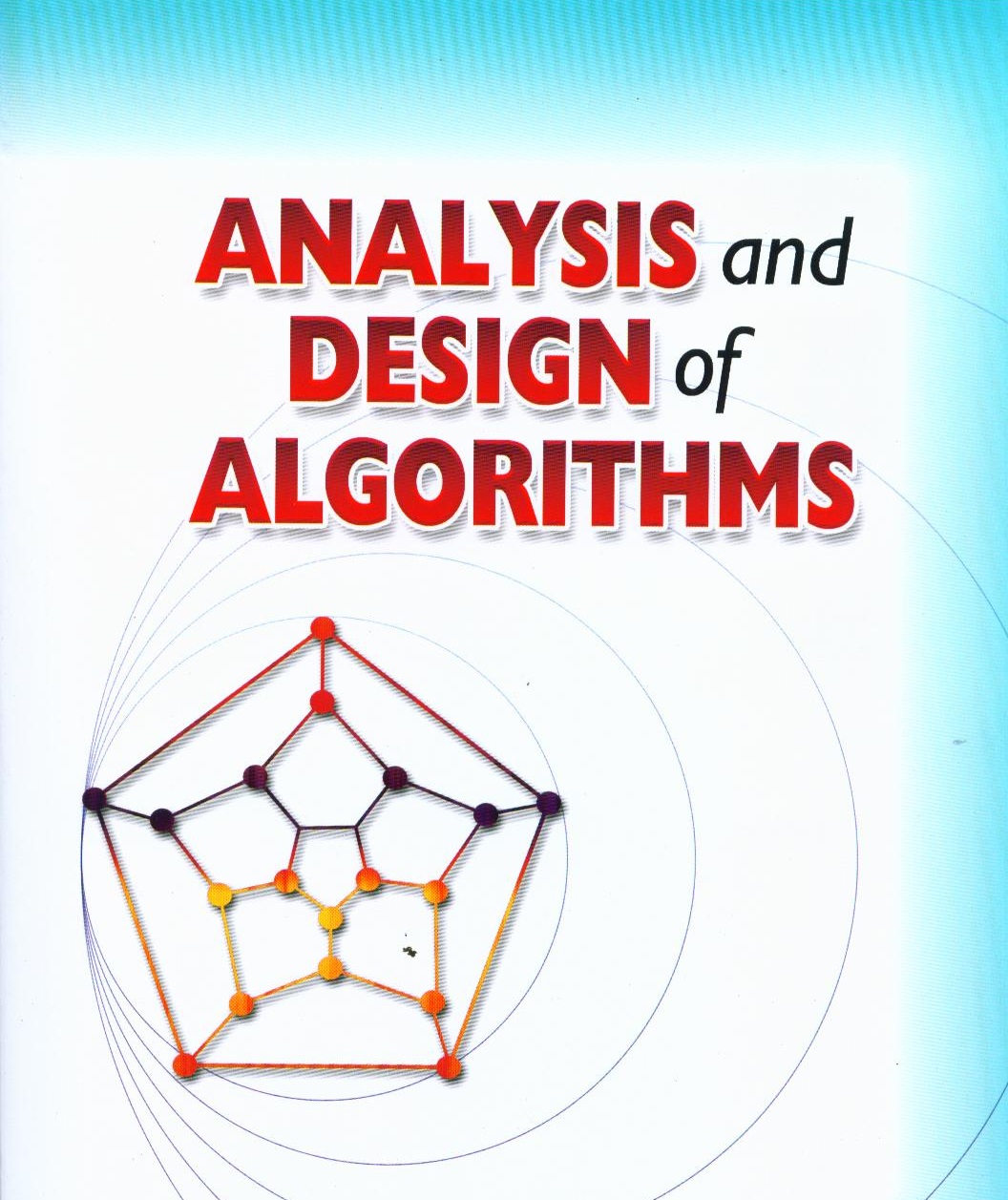
The course on Algorithms introduces students to the fundamental principles of problem-solving and efficient computation. It covers the design and analysis of algorithms, including asymptotic complexity, sorting and searching techniques, graph algorithms, and advanced paradigms such as divide and conquer, greedy methods, dynamic programming, and backtracking. The course also explores hashing, string matching, and concepts of NP-completeness, emphasizing both theoretical understanding and practical applications. By the end of the course, students gain the ability to analyze problems, design optimized solutions, and apply algorithms effectively in real-world scenarios.
- Teacher: DR PRASHANT AGARWAL [MCA]
Objective - This course introduces the foundational concepts
of Machine Learning and its integration into modern Generative AI systems. It
emphasizes the application of supervised, unsupervised, and deep learning
models – including transformers and LLMs – along with practical exposure to
prompt engineering, generative models, and ethical AI practices.

- Teacher: MS NEELAM RAWAT [MCA]
| CO1 | Demonstrate frontend web application using React JS. | ||||
| CO2 | Illustrate navigation and hooks in front end web application using React Router and React Hooks Library | ||||
| CO3 | Apply React AXIOS Library to fetch RESTful API. | ||||
| CO4 | Analyse backend web apps using Node JS. | ||||
| CO5 | Test RESTful API using Node JS. | ||||
- Teacher: Mr. Saurabh Choudhary [MCA]
| CO1 | Demonstrate frontend web application using React JS. | ||||
| CO2 | Illustrate navigation and hooks in front end web application using React Router and React Hooks Library | ||||
| CO3 | Apply React AXIOS Library to fetch RESTful API. | ||||
| CO4 | Analyse backend web apps using Node JS. | ||||
| CO5 | Test RESTful API using Node JS. | ||||
Operating System
CS206L - CSIT - 3-C
Faculty: Dr. Harsh Khatter
Credit: 3-0-0
- Teacher: Dr. HARSH KHATTER [CO]
- Teacher: MR BHOOPENDRA KUMAR [CSI]
- Teacher: Yousuf Haider [CSIT]
IE
KME-503
- Teacher: Mr. Anandkumar Prajapati [CSE]
- Teacher: Ms. Maitree [CSE]
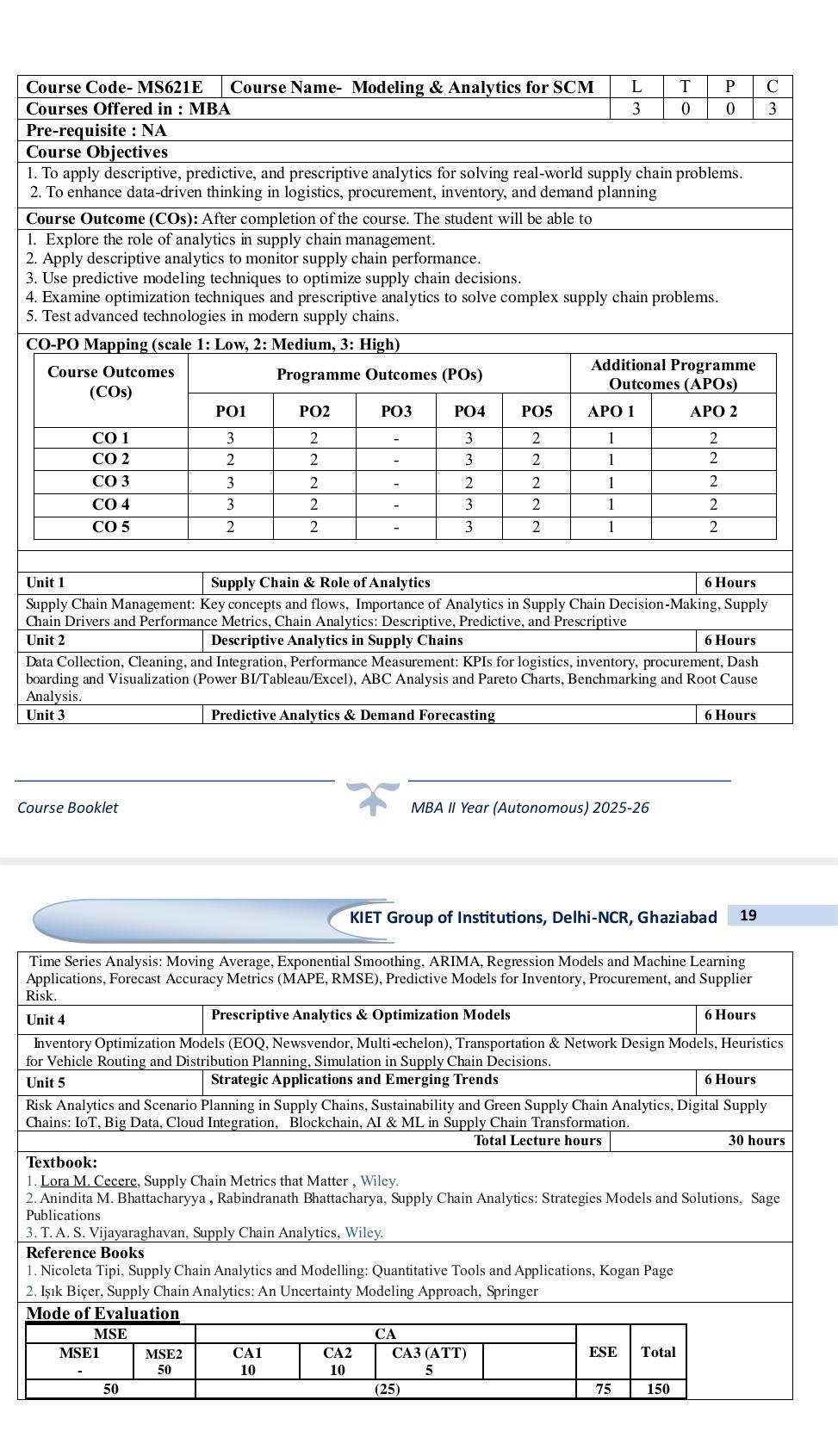
Syllabus outline for the MBA course Data Mining Techniques – Predictive Modeling & Pattern Discovery using R (MS617E) offered at KIET Group of Institutions, Delhi-NCR.
It covers data mining technologies, data warehousing & preprocessing, predictive modeling, R programming, and data analytics in R over 30 lecture hours. The course aims to build skills in applying data mining techniques, predictive models, and R programming for business problem-solving.
Key outcomes include applying data warehousing, preprocessing, predictive modeling, and evaluating data analytics in real-world contexts. Evaluation is based on MSE, CA (class assessments), and ESE, totaling 150 marks.
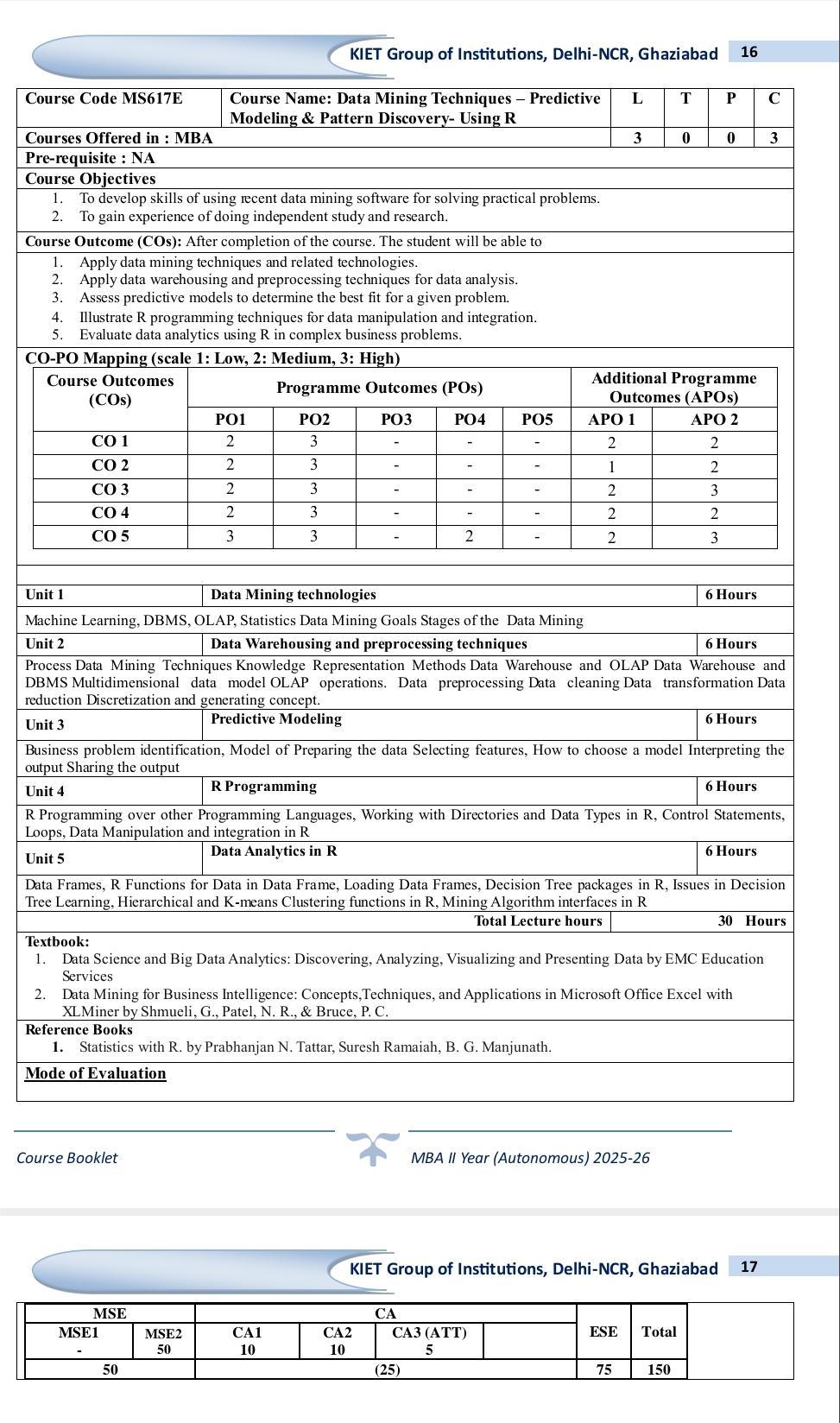
Evaluation is through MSE (50 marks), CA (25 marks), and ESE (75 marks), totaling 150 marks.